Why Micro-Streamers Are an Underrated Channel for Brand Awareness
Small live channels offer close-knit communities, tight niches and low prices. Here's what the research says, where the risks are and how to test them cheaply.
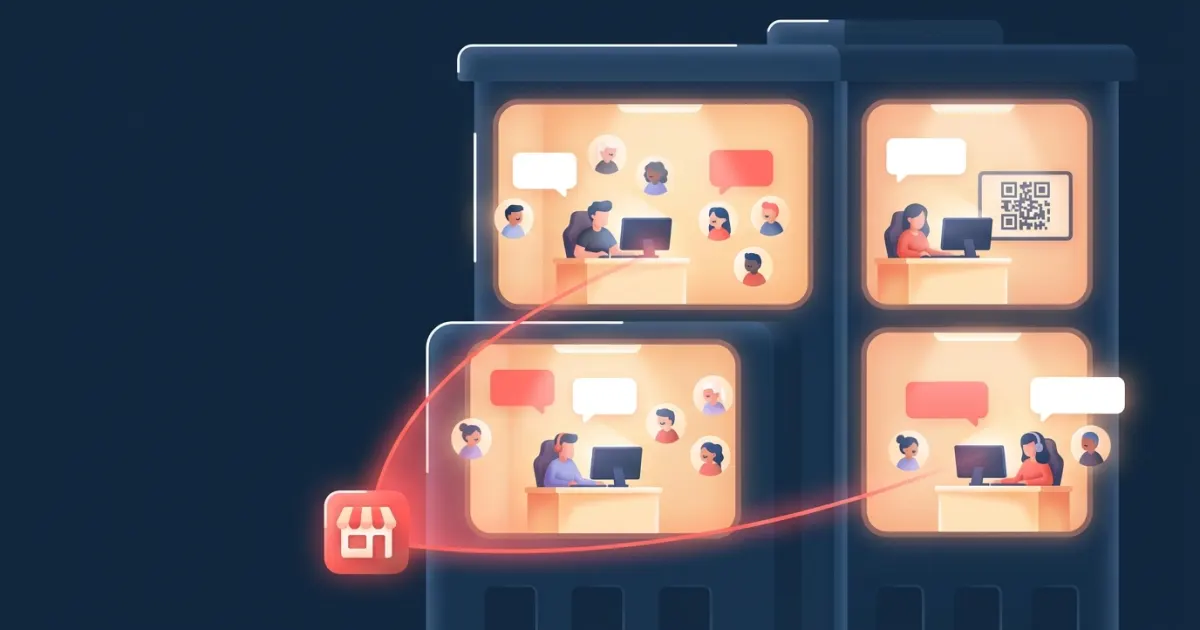
Micro-streamers are underrated because most brands judge channels by reach, and a stream with 40 viewers looks tiny next to one with 40,000. What small channels offer instead is attention inside a community: viewers who come to chat, regulars who know each other, and niches narrow enough to match a specific product. For a small business, they're also affordable enough to test several at once, as long as you vet them carefully and track every placement.
Key takeaways
- In a survey of 2,227 Twitch users, viewers who preferred smaller channels were more motivated by social engagement than fans of bigger ones.
- More followers doesn't automatically mean more engagement. A large study found engagement peaks at intermediate audience sizes.
- More than half of marketers in a 2026 industry survey plan to expand or start work with nano and micro creators.
- The main risks are small reach, irregular schedules, fake engagement and brand safety. Vet by watching live and judge by tracked results.
- Test cheaply: several short placements on niche channels, each with its own tracking link.
What is a micro-streamer?
There's no official definition. In this article, a micro-streamer is a live creator with a small but steady audience, from a handful to a few hundred people watching at the same time. That number is called concurrent viewers, and it's a better measure of a live channel than follower count, because followers don't tell you how many people are actually in the room.
Small channels are the norm. TwitchTracker, a third-party analytics site, estimates that in 2025 roughly 2.17 million viewers were watching Twitch at any given moment, spread across about 93,200 live channels. That works out to about 23 viewers per live channel on average, and because a few channels draw thousands of viewers each, many channels sit well below that average.
Why small streams punch above their weight
People come for the community
Live streaming is a social medium first. A peer-reviewed study in Computers in Human Behavior by Hilvert-Bruce and colleagues surveyed 2,227 Twitch users and found six motivations behind engagement: social interaction, sense of community, meeting new people, entertainment, information seeking and a lack of external support in real life. Compared with mass media, the authors write, live-stream motivations "appear to have a stronger social and community basis." Most relevant for sponsors: viewers who preferred smaller channels (under 500 viewers) were more motivated by social engagement than viewers who preferred larger channels.
An earlier ethnographic study of Twitch presented at the ACM CHI conference by Hamilton, Garretson and Kerne describes the same pattern from the inside: as streams scale up, "information overload renders chat unreadable," and many participants "choose to participate in smaller streams, which they experience as affording more meaningful interaction."
For a sponsor, that means your banner appears in a room where people are paying attention to each other and to the streamer. In a small stream, the streamer can read your message aloud, answer a question about it in chat, and the regulars notice something new on screen.
Bigger isn't automatically better
A study in the Journal of Marketing by Wies, Bleier and Edeling, summarized by the American Marketing Association, analyzed more than 1,700 influencers across more than 800 Instagram campaigns. It found that "the relationship between an influencer's follower count and engagement follows an inverted U-shape": engagement rises with audience size up to a point, then falls as viewers feel a weaker personal tie to the creator. The data is from Instagram, not live streams, so treat it as directional. Still, it challenges the idea that the largest creator is always the best buy.
Niches let you match the product
Small channels tend to be specific: one game genre, one hobby, one language, one city. That's useful when your product is specific too. An indie studio making a cozy farming game can find streamers who play exactly that genre. A local business can look for streamers in its region. A tool for musicians can sponsor music-production streams. The narrower the match, the less of your budget goes to people who will never care.
Viewers expect sponsors to support creators
Amazon's Twitch advertising guide cites a survey in which 64% of viewers said watching video ads or sponsorships can be beneficial "since it supports the creators of the free content they enjoy." That's Twitch's own ad-sales research, so weigh it accordingly, but it suggests many viewers see sponsorships as a way to support creators they like.
Low prices make testing realistic
Smaller audiences usually mean lower prices, and per-minute pricing lowers the entry point further. Instead of one large deal, you can buy several short placements, learn which niches respond, and scale only what works. Our explainer on pay-per-minute ads shows the math.
What the wider industry is doing
Marketers say they plan to shift toward smaller creators. In the Influencer Marketing Hub 2026 benchmark report, based on a survey of 600+ marketing professionals, 51.43% of respondents said they plan to increase or start working with nano creators and 52.83% said the same for micro creators. Plans for macro creators were essentially neutral, at 20.59% expansion versus 20.58% contraction. The report itself cautions that intent doesn't guarantee execution, and it covers influencer marketing broadly rather than live streams, but the direction is clear.
The risks, and how to manage them
Micro-streamers aren't risk-free. Here's what to watch for:
| Risk | What it looks like | How to manage it |
|---|---|---|
| Small reach per stream | One slot reaches dozens or hundreds of people, not thousands | Book several channels in the same niche and judge them as a group |
| Irregular schedules | Streams start late or get canceled | Prefer channels with a posted, consistent schedule |
| Fake engagement | Viewer counts that don't match chat activity | Watch live, compare chat to the viewer count, judge on tracked results |
| Brand safety | Language, content or past sponsors you don't want near your brand | Watch full streams before buying and set clear content rules |
| Disclosure gaps | Sponsored content that isn't labeled | Put "Ad" or "Sponsored" on your banner and ask for the platform's disclosure tool |
| Noisy data | Small numbers swing a lot from one stream to the next | Test several channels at once and repeat before drawing conclusions |
Fake engagement deserves extra attention. In the same Influencer Marketing Hub survey, fake or bot followers made up 56.5% of all fraud and quality issues marketers reported. On disclosure, remember that brands share the responsibility. The FTC's Endorsement Guides FAQ says advertisers "need to have reasonable programs in place to train and monitor members of their network." This is general information, not legal advice.
How to test micro-streamers cheaply
- Choose one niche and one offer, for example a demo download or a first-order discount.
- Shortlist eight to ten channels in that niche, then watch each live for at least 20 to 30 minutes.
- Keep the four to six with real conversation in chat and a consistent schedule.
- Book short slots, 10 to 15 minutes each, in the same week so conditions are comparable.
- Give every channel its own tracking, such as a UTM-tagged link with the streamer's name in utm_content and a separate QR code. Our guide to QR codes on live streams covers size and contrast.
- Compare cost per scan and cost per sign-up, then re-book the top one or two for longer slots.
Here's how a test might look. Every number below is made up for illustration, including the results:
| Example channel | Concurrent viewers | Price per minute | Minutes | Cost | Hypothetical scans | Cost per scan |
|---|---|---|---|---|---|---|
| A | 25 | $1.00 | 15 | $15.00 | 3 | $5.00 |
| B | 40 | $1.50 | 15 | $22.50 | 2 | $11.25 |
| C | 80 | $2.00 | 15 | $30.00 | 9 | $3.33 |
| D | 150 | $3.00 | 15 | $45.00 | 6 | $7.50 |
In this example, the biggest channel isn't the most efficient one. Channel C, with a mid-sized but engaged audience, delivers scans at the lowest cost, so it gets the next round of budget.
Measure awareness, not just clicks
Awareness campaigns rarely convert on the spot, so look beyond scans. Track branded searches, direct visits, follows, wishlists or sign-ups in the days after each slot, and ask new customers where they heard about you. Keep screenshots of each placement so you can match spikes to specific streams. For a full setup, see how to track live stream ad results.
How this works on AD on Live
AD on Live is a self-serve marketplace where streamers sell short banner slots on their stream overlay. Sign-up is free for streamers, so small channels can sell slots as easily as big ones. Each streamer sets a price per minute and a banner size. When no ad is running, the overlay shows a QR code and the price ("AD Here — $X/min") unless the streamer has hidden it, so you can scan it and book the next slot from the streamer's booking page. Streamers can also opt in to the channels directory, where you can browse channels taking bookings. You don't need an account: choose 1 to 60 minutes, upload a JPG, PNG or GIF banner up to 2 MB, crop it to the streamer's aspect ratio and pay with PayPal.
Payment is a PayPal authorization that is captured only when the streamer approves your ad, or right away if they use auto-approve and are on air when you book. If the streamer rejects it or doesn't respond within 3 days, the authorization is voided and the hold is released. While your ad runs, the banner shows with a QR code, a countdown and a small "Ad" label, and the QR code goes through a short tracking link that counts scans and clicks. AD on Live doesn't measure impressions or viewer counts, so pair it with your own UTM tracking.
Small channels, specific audiences
Micro-streamers won't replace broad reach campaigns, but they offer something big channels can't: a seat inside small communities that match your niche, at prices that make experiments affordable. Start with a handful of channels, track each one separately and put more budget behind the rooms where people respond. To find streamers and book your first slot, visit AD on Live for advertisers.
Frequently asked questions
What is a micro-streamer?
There is no official definition. Here it means a live creator with a small but regular audience, from a handful to a few hundred people watching at the same time. Concurrent viewers are a better size measure for live channels than follower counts.
Are micro-streamers good for brand awareness?
They can be, especially for niche products. A survey of Twitch users found that viewers who prefer smaller channels are more motivated by social engagement, so a sponsor shows up inside a close-knit community. Reach per stream is small, so plan to work with several channels.
How much does it cost to advertise with a small streamer?
Each streamer sets their own price, so costs vary widely. With per-minute overlay slots, a test can start at the cost of one minute on one stream, which makes it practical to try several small channels before committing a bigger budget.
How do I avoid fake viewers when choosing small streamers?
Watch a full stream live and look for real conversation in chat, steady viewer numbers and a regular schedule. Then judge each streamer on tracked results, such as QR scans and landing-page visits, rather than on the viewer count alone.
Sources
- twitchtracker.com/statistics
- researchportal.tuni.fi/en/publications/social-motivations-of-live-streaming-viewer-engagem...
- ecologylab.net/research/publications/streamingOnTwitch.pdf
- ama.org/2022/10/11/finding-goldilocks-influencers-why-high-follower-count-may-not-be-the-b...
- advertising.amazon.com/library/guides/twitch-ads
- influencermarketinghub.com/influencer-marketing-benchmark-report/
- ftc.gov/business-guidance/resources/ftcs-endorsement-guides-what-people-are-asking
Advertise on a live stream
Book a sponsor slot by the minute. You're charged only if the streamer approves your ad.
See how it works